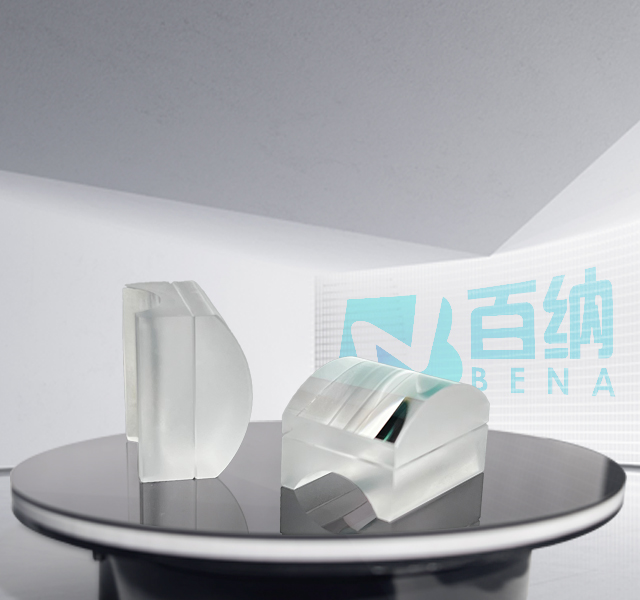
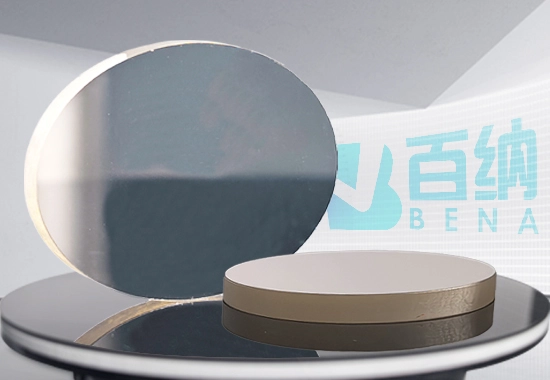
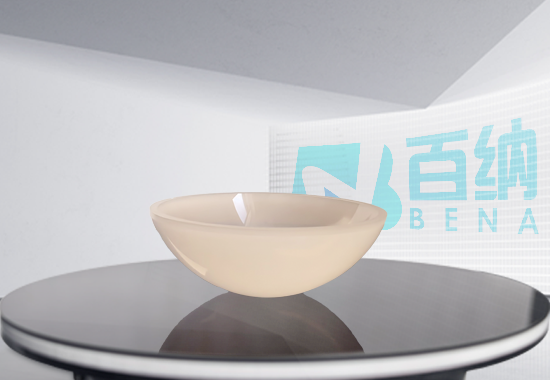
In CO2 laser cutting, engraving and marking systems, optical components directly influence beam quality, focusing accuracy and processing results. Among different infrared optical materials, ZnSe lenses are widely used because they provide reliable transmission performance for CO2 laser wavelengths and support precise beam focusing in industrial applications.
Choosing the right laser lens is not only about selecting a suitable material. Engineers and equipment manufacturers need to consider focal length, spot size, optical quality, coating performance, power handling capability and application requirements to achieve stable laser processing performance.
This guide explains why ZnSe lenses are commonly used in CO2 laser systems, how they affect cutting and engraving precision, and what specifications should be evaluated when selecting lenses for high-power laser applications.
ZnSe, or zinc selenide, is one of the most commonly used optical materials for CO2 laser systems because of its excellent infrared transmission characteristics. CO2 lasers typically operate at a wavelength of approximately 10.6 μm, where ZnSe provides suitable optical performance for focusing and beam delivery applications.
Compared with many conventional optical materials, ZnSe offers several advantages for CO2 laser applications:
Excellent infrared transmission at CO2 laser wavelengths
Low absorption characteristics for efficient beam transmission
Good thermal performance for industrial laser processing
Suitable optical properties for precise focusing applications
Compatibility with various laser cutting, engraving and marking systems
Because laser processing depends heavily on accurate energy concentration, the optical material and lens quality can directly affect cutting speed, edge quality and engraving details.
The focusing lens determines how the laser beam is concentrated onto the material surface. A properly selected lens can create a smaller and more controlled laser spot, improving energy density and processing accuracy.
Several lens factors influence laser performance:
Focal length affects working distance, spot size and cutting characteristics. Shorter focal lengths generally create smaller spots with higher energy density, which can be suitable for detailed engraving or fine cutting. Longer focal lengths provide greater working distances and may be preferred for thicker materials or applications requiring more tolerance.
The lens diameter influences the amount of laser energy that can pass through the optical component and should be selected according to the laser power and system design.
Surface quality, dimensional accuracy and coating performance can affect beam stability and long-term processing consistency. Poor optical quality may result in reduced focus accuracy, uneven energy distribution or decreased cutting performance.
For manufacturers and users looking for suitable znse lenses for CO2 laser applications, lens specifications should always be matched with the laser source, power level, working distance and processing requirements rather than selected only by size.
Different laser applications require different lens characteristics. Selecting the right ZnSe lens depends on the material being processed, required precision, machine configuration and production goals.
For CO2 laser cutting, lens selection should consider cutting thickness, laser power, focus position and thermal stability. Higher-power systems require optical components with reliable performance under continuous operation.
Engraving applications often require smaller and more precise laser spots. A suitable focal length can improve detail reproduction, line definition and engraving consistency.
Laser marking typically focuses on precision and repeatability. Lens selection should balance beam quality, working area and required marking resolution.
Before selecting a lens, equipment manufacturers should evaluate the complete optical path, including laser source specifications, mirror configuration, focusing distance and intended processing materials.
High-power CO2 laser systems place greater demands on optical components. In addition to material selection, buyers should evaluate detailed specifications that influence performance and reliability.
Material grade: Optical-grade ZnSe should be selected according to application requirements.
Focal length: Determines working distance and focus characteristics.
Diameter: Must match the optical system and laser power level.
Surface quality: Influences beam transmission and focusing accuracy.
Coating performance: Helps improve transmission efficiency and durability.
Dimensional tolerance: Important for consistent installation and optical alignment.
For OEM laser equipment manufacturers, stable optical performance and consistent production quality are especially important because even small variations in lens specifications may affect final machine performance.
Custom optical components are often required when standard lens specifications cannot fully meet a laser system's design requirements. A professional optical manufacturer should be able to support customization based on drawings, application conditions and performance requirements.
Important factors in custom ZnSe lens production include:
Lens dimensions and geometry
Focal length requirements
Surface accuracy and quality control
Coating requirements
Laser wavelength compatibility
Inspection and testing procedures
From optical material selection and precision processing to coating and quality inspection, each production step affects the final performance of the lens. Working with an experienced manufacturer helps ensure stable quality for industrial laser systems.
Bena Optics provides ZnSe optical components for CO2 laser cutting, engraving and marking applications, supporting customers with different lens specifications and industrial requirements.
ZnSe lenses are widely used in CO2 laser systems because ZnSe provides excellent infrared transmission at the 10.6 μm wavelength commonly used by CO2 lasers.
Focal length affects spot size, working distance and energy concentration. Different applications may require different focal lengths depending on material thickness and processing precision.
Yes. ZnSe lenses are commonly used in CO2 laser cutting, engraving and marking systems. The appropriate lens specification depends on the machine configuration and application requirements.
Buyers should evaluate material quality, focal length, diameter, surface accuracy, coating performance, tolerance requirements and compatibility with the laser system.
Replacement frequency depends on operating conditions, laser power, contamination control and maintenance practices. Regular inspection helps identify damage or performance degradation.
Yes. Custom dimensions, focal lengths, coatings and optical specifications can be developed according to specific laser equipment requirements.