Optical components play a crucial role in petroleum exploration, covering seismic surveying, well logging, reservoir monitoring, and more. Fiber-optic sensors (such as FBG and DTS/DAS) are used for vibration, temperature, and pressure monitoring, offering advantages like high immunity to interference and long-distance distributed sensing, making them ideal for deep-sea and complex geological environments. Fiber-optic imaging logging (MCI, LIBS) provides high-resolution wellbore images and elemental analysis.
Optical imaging has become a crucial tool in medical diagnostics. Techniques such as Optical Coherence Tomography (OCT) and Laser Scanning Confocal Microscopy (LSCM) provide high-resolution images that offer ample information for diagnosis and treatment. Endoscopy is another significant application of optical imaging in the medical field.
Optical components are also prevalent in various environmental monitoring applications. Technologies such as optical coherence tomography, optical filters, and optical sensors are used to detect and analyze the environment on which humanity depends.
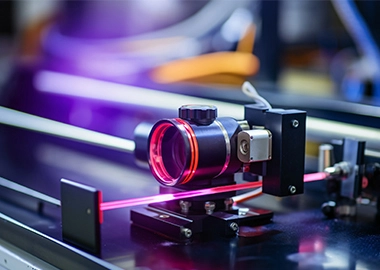
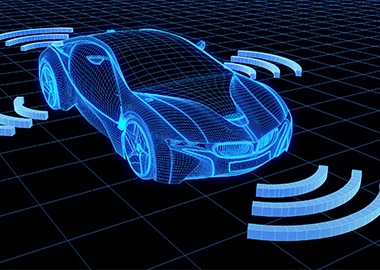
Laser systems are a major application area for optical components. They are used in technologies such as LiDAR, laser projection, laser marking machines, laser scanners, laser welding, and laser cutting equipment.
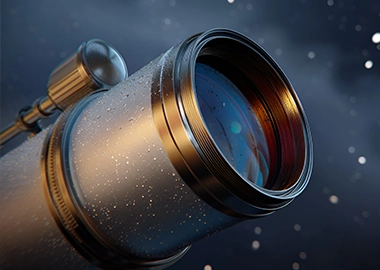
The application of optical components in imaging and optoelectronic systems primarily manifests in imaging, filtering, focusing, improving image quality, and optical sensing. Optical imaging systems have become core technologies in many fields, such as medical imaging, drone aerial photography, astronomical observation, and manufacturing.